
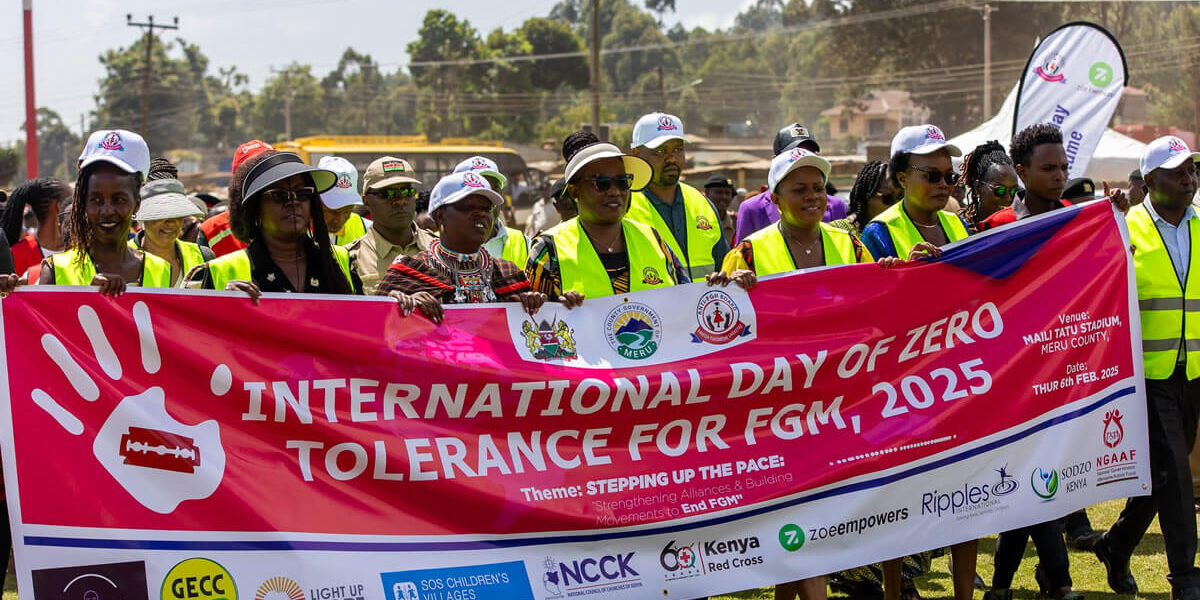
Mitigating Female Genital Mutilation (FGM) in Kenya is a multi-faceted effort combining legal frameworks, community-driven initiatives, and survivor-led advocacy to achieve the national goal of eradicating the practice by 2030. While the 2011 Prohibition of Female Genital Mutilation Act makes the practice illegal, high-prevalence areas continue to face challenges, with new trends emerging such as cutting at a younger age and cross-border FGM.
Key strategies for mitigating FGM in Kenya include:
1. Legal Framework and Law Enforcement
- Prohibition of FGM Act (2011): This legislation criminalizes FGM, with penalties including a minimum of three years imprisonment, a fine, or both.
- Anti-FGM Prosecution Unit: Established under the Office of the Director of Public Prosecutions (ODPP) to handle and expedite cases.
- Cross-Border Collaboration: Kenya has signed agreements with Uganda, Tanzania, Ethiopia, and Somalia to address cases where families cross borders to evade the law.
- Anti-FGM Board: A semi-autonomous agency that coordinates and monitors eradication programs in 22 high-prevalence “hotspot” counties.
2. Community-Driven Initiatives
- Alternative Rites of Passage (ARP): These programs offer a cultural transition to womanhood without the cut, combining education on traditional values with training on rights and health.
- Engaging Men and Boys: Recognizing that social norms are heavily influenced by males, programs like “Men End FGM” engage elders and warriors (morans) to stop the practice.
- Involvement of Cultural/Religious Leaders: Religious leaders and local elders (e.g., in the Somali and Maasai communities) are increasingly partnering with UNICEF to debunk the myth that FGM is a religious requirement.
- Community Surveillance and Reporting: Systems like the Nyumba Kumi (ten-household) initiative are used for community policing and reporting, allowing communities to track at-risk girls and report secret cutting rituals.
3. Empowerment and Protection of Girls
- Rescue Centers and Safe Spaces: Temporary shelters exist for girls running away from FGM and forced marriage.
- Education and Mentorship: Educating girls is a key preventative measure, as educated mothers are less likely to have their daughters cut. Girls’ clubs in schools provide mentorship and life skills training.
- Empowering Survivors: Survivor-led campaigns (e.g., “FGM MUST END with us; Dear Daughter Campaign”) are crucial in changing local mindsets by sharing the painful reality of the practice.
4. Challenges to Mitigation Efforts
- Medicalization of FGM: An alarming trend where trained medical professionals perform the cut, wrongly leading families to believe it is safer.
- Secrecy and Younger Age: The practice has moved underground, with girls being cut at a younger age (sometimes infancy) to evade detection.
- Weak Enforcement in Remote Areas: Despite legal bans, cultural pressures in certain regions can weaken the implementation of the law.
The Kenyan government, in partnership with organizations continues to focus on strengthening community engagement to ensure that the prohibition of FGM is recognized as a matter of human rights, not just a legal obligation.